
Great American Roadtrips
This article originally appeared in the 2026 edition of Inbound Insider: The Official IITA Member Directory & Magazine.
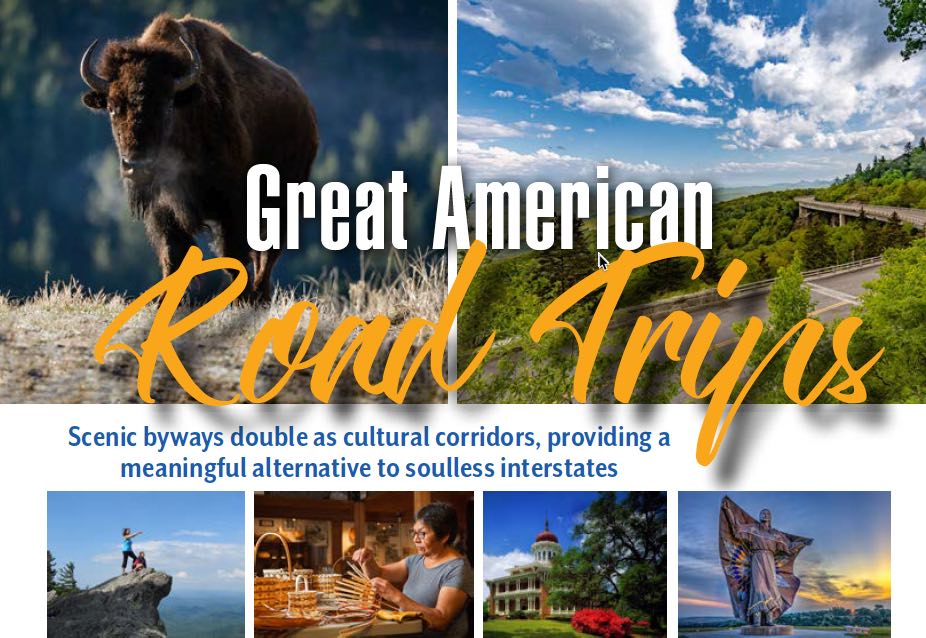
NO OTHER TYPE OF VACATION can rival the exhilaration and sense of freedom that an epic road trip offers. Cars play an integral part in the American identity, and hitting the open road is the ultimate expression of independence and the country’s pioneering spirit. Drive trips are part of the national consciousness, a genuinely American experience.
By Randy Mink
While many travelers are content to zip at a fast clip along interstate highways, satisfied with chain hotels and restaurants and all the homogeneity that brings, more and more people are elevating road journeys to a new level. Straying from overly commercial pathways, they are opting for scenic byways that pass through small towns and wilderness areas, away from big cities and suburban sprawl.
Delivering more than speedy point-to-point transportation, these slower-paced ribbons of asphalt connect road trippers not only with nature but with America’s folkways and historical roots, cherished traditions of Indigenous peoples and friendly local communities with stories to tell. The federal government has designated such thoroughfares as All-American Roads or National Scenic Byways.
Here are six of the best scenic drives in the USA. Full of eye-popping scenery and cultural discoveries, these routes work well with fly-drive itineraries for inbound groups arriving in major gateway cities.
Trail of the Ancients
This National Scenic Byway showcases Native American history in the Four Corners region, a land of stunning red-rock landscapes where the states of Colorado, Utah, Arizona and New Mexico meet. The route is dedicated to the archaeology and culture of the Ancestral Puebloan people who once inhabited the American Southwest.
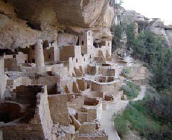
In southwestern Colorado, Mesa Verde National Park is known for its massive 12th and 13th-century cliff dwellings set high in sandstone cliffs. Canyon of the Ancients National Monument, 17 miles from Mesa Verde, boasts the highest density of Native American archaeological sites, including cliff houses, kivas (religious chambers), and petroglyphs, and it has an excellent museum.
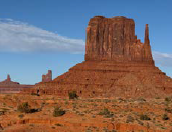
Other highlights on the Trail of the Ancients (a 350-mile roundtrip from Cortez, Colorado) include southeastern Utah’s Hovenweep National Monument, with its unusual tower ruins; Monument Valley Navajo Tribal Park, whose iconic buttes on the Arizona-Utah border have appeared in countless Western movies; and Four Corners Monument, a photo op at the only point where road trippers can stand in four states at once.
Native American Scenic Byway
This byway runs north and south through 350 miles of central South Dakota, extending 34 miles into North Dakota. Offering scenic views of the Missouri River and surrounding prairie, it passes through the reservations of five Sioux Nation tribes — Standing Rock, Cheyenne River, Crow Creek, Lower Brule and Yankton.
Memorial markers, monuments, museums and sacred sites commemorate the heritage of the Sioux Nation. Wildlife watchers may see deer, pronghorn and prairie dogs, plus buffalo and elk herds maintained by the tribes. Bald eagles, sacred in Native cultures, can be spotted at Randall Creek State Recreation Area and Karl E. Mundt National Wildlife Refuge.
The top-notch Akta Lakota Museum & Cultural Center, on the campus of St. Joseph’s Indian School in Chamberlain, abounds with historical treasures and contemporary Native art. Overlooking the Missouri River outside of Chamberlain is Dignity: Of Earth & Sky, a 50-foot-tall steel sculpture of a Native woman casting her gaze across the plains. Dakota Plains Gallery displays works by Great Plains artists — quilts, baskets, beadwork and oil paintings. Stop in Mobridge to admire the 10 murals painted by prominent Native American artist Oscar Howe.
Natchez Trace Parkway
A unit of the National Park Service, this scenic two-lane All-American Road runs southwest from just south of Nashville, Tennessee to the outskirts of Natchez, Mississippi. Points of interest, marked every few miles, recall the history of one of the American frontier’s most traveled roads between the 1780s and 1820s, a trade route originally blazed by Native Americans.
Unimpeded by billboards and commercial vehicles, the leisurely 444-mile drive winds through woodlands and fields of corn, cotton and soybeans. There are scenic overlooks, picnic areas and hiking trails that lead to waterfalls and old mining sites, but no gas stations, restaurants or lodging.
Natchez, the oldest settlement on the Mississippi River, is famous for its antebellum mansions. Nashville, nicknamed Music City, is home to the Grand Ole Opry and Country Music Hall of Fame and Museum.
Among places to visit in Mississippi are Tishomingo State Park, with its huge boulders and fern-filled crevices; Cypress Swamp; Emerald Mound, the hub of an Indian ceremonial center; and Mount Locust Inn, a restored 1784 plantation home that stands as the only survivor of the many inns that once dotted the Trace. The town of Tupelo claims the Elvis Presley Birthplace and Museum, the Trace’s only visitor center and Tupelo National Battlefield, a Civil War site.
Blue Ridge Parkway
Another non-commercial two-lane road managed by the National Park Service, the Blue Ridge Parkway is the longest linear park in the country. This All-American Road stretches 469 miles along the spine of mountains between Virginia’s Shenandoah National Park and Great Smoky Mountains National Park on the North Carolina-Tennessee border. Each bend of the ribbon-like highway reveals another photo-worthy scene, and there are many pull-offs for taking in the vistas.
Outdoor museums at historic farms, old mills, and family homesteads paint a picture of Appalachian history. Fall color season is the most popular time to visit.
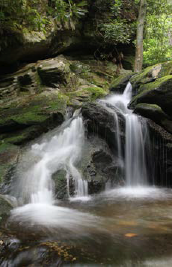
In southwestern Virginia, picture-perfect Mabry Mill offers demonstrations at the gristmill, sawmill, and blacksmith shop. Its restaurant serves classic Southern cooking. The Blue Ridge Music Center near Galax presents performances of old-time mountain music. North Carolina highlights include the three-tiered cascade at Linville Falls, accessible via hiking trails; the swinging bridge a mile above sea level at Grandfather Mountain; historical attractions maintained by the Eastern Band of Cherokee Indians; and the artsy city of Asheville.
 Cherohala Skyway
Many motorists say the mile-high vistas offered by this 43-mile National Scenic Byway rivals the beauty of any comparable stretch of the Blue Ridge Parkway. The road runs along the crest of the Unicoi Mountains between Robbinsville in the southwest corner of North Carolina to Tellico Plains in southeastern Tennessee. It is named for the Cherokee and Nantahala national forests, which line each side of the highway.
Popular stops along or near the road include hiking trails to peaks like Huckleberry Knob, which offers 360-degree views; Joyce Kilmer Memorial Forest, an old-growth forest with huge yellow poplars; and Cherokee attractions such as the Museum of the Cherokee People, Qualla Arts and Crafts Mutual, and Oconaluftee Indian Village.
Strait of Juan de Fuca Highway
One of the most scenic stretches in the Pacific Northwest, this 61-mile coastal road offers pretty forest and water views, quaint fishing villages, remote beaches, and Native American heritage. Here at the most northwesterly point in the contiguous United States, the National Scenic Byway follows the channel that separates Washington’s Olympic Peninsula and Vancouver Island in British Columbia, Canada. Motorists may spot eagles diving, gray whales spouting, and otters splashing.
The quiet seaside settlement of Neah Bay, surrounded by the Makah Reservation, is home to the Makah Cultural and Research Center. The museum’s tribal artwork and artifacts date as far back as the 16th century. Its centerpiece is a full-size cedar longhouse. Displays include whaling and seal-hunting canoes and weapons.
Reprinted with permission from the 2026 issue of Inbound Insider, published by IITA in partnership with Premier Travel Media.