IITA in Washington: Turning Industry Realities into Action
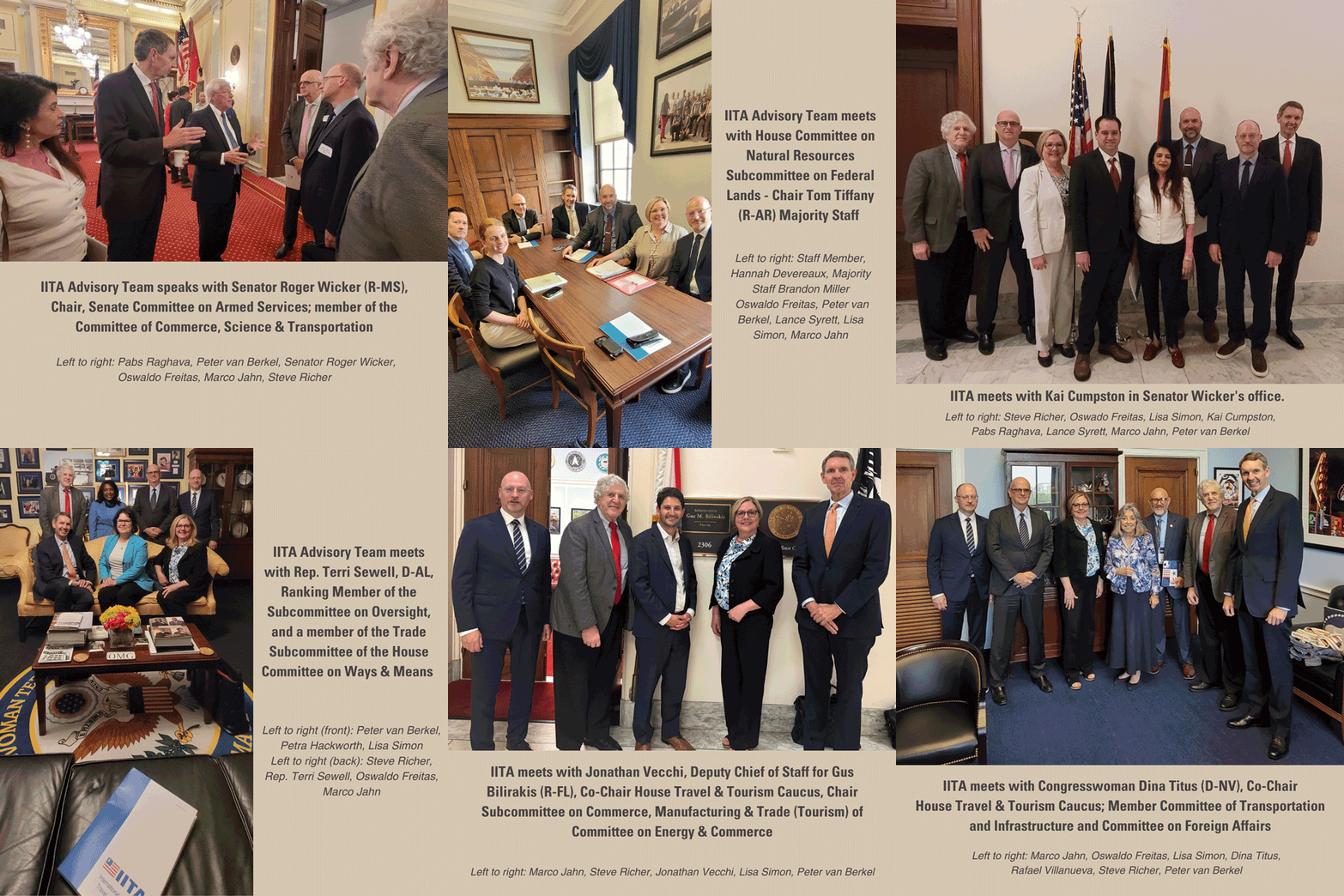
This week, IITA’s Advocacy Committee brought the voice of the inbound travel industry directly to Washington through a series of high-level meetings with federal agencies and key congressional leaders, during Destination Capitol Hill (DCH) – the travel industry’s annual legislative event. DCH brings together hundreds of tourism professionals to ensure lawmakers across the country understand travel and tourism issues.
While industry delegations focus on geographic representation, IITA continues to prioritize where policy is shaped—meeting with decision-makers, committee leadership, and the staff who are actively writing and implementing policy.
Addressing National Park Operational Challenges
A central focus of our meetings was the implementation of the $250 non-resident America the Beautiful pass for national parks and its real-world impact on commercial group tours.
In meetings with Department of the Interior leadership, including Assistant Secretary Kevin Lilly and National Park Service Director Jessica Bowron, we shared firsthand accounts from our members that underscore the operational breakdowns currently occurring at park entrances. These include significant delays at entry gates, inconsistent enforcement across parks, and, in some cases, buses being boarded by staff to check passports or requiring international visitors to disembark to purchase passes on-site.
“We made clear that while we support sustainable funding for national parks, the current approach is creating friction for visitors and operational burdens for tour operators—ultimately putting both visitor experience and gateway community economies at risk,” said Peter van Berkel, IITA’s Advocacy Chair and president of Travalco. “We continue to press for practical, scalable solutions, including streamlined group processing and bulk purchasing mechanisms for tour operators.”
The good news - Assistant Secretary Lilly listened intently to the concerns and committed to finding a viable solution for commercial groups. The bad news – NPS Director Bowron indicated that they don’t expect a solution before Memorial Day – well into the peak summer season.
IITA will continue pushing for a faster solution and will follow up immediately with recommendations.
A Coordinated Federal Approach to Tourism
We also met with Deputy Assistant Secretary of Travel and Tourism Robert O’Leary, who many members will remember from his participation at IITA’s Summit earlier this year. He shared updates on efforts to develop a national strategy that aligns tourism policy across the federal government—an important step toward a more coordinated, “all-of-government” approach to supporting inbound travel.
Encouragingly, his office and the National Travel and Tourism Office indicated that more welcoming and proactive messaging about travel to the United States is forthcoming, particularly in advance of this summer’s FIFA World Cup. This is a critical opportunity to reinforce that the U.S. is open and ready to welcome international visitors.
Visa Processing Progress Ahead of FIFA
At the U.S. Department of State, we met with senior leaders from Visa Services, including Amy Tachco and Morgan Kuehne, to discuss visa processing progress worldwide. They reported a significant surge in consular staffing and resources to ensure that visa interview capacity meets anticipated demand from FIFA-related travel.
This investment is not only vital for event-driven travel but will have broader benefits across the entire inbound system — helping to reduce wait times and improve access for travelers in key international markets.
Visa officials reported notable improvements across the visa processing system bringing wait times to below 60 days in most markets. IITA members shared stories of cancellations from large, affluent groups from Middle East and African markets due to consular offices being closed across the Middle East and disruptions to air travel through the region.
Engaging Congress Where Policy Happens
In addition to agency engagement, we met with members of Congress and key committee staff across both chambers—particularly those with jurisdiction over national parks, tourism, and international travel policy.
This included leadership and staff from the House and Senate Natural Resources Committees (and their national parks subcommittees), appropriations and authorizing subcommittees overseeing tourism, and the House and Senate Foreign Relations Committees, which play a critical role in visa policy and entry processes.
We also had the opportunity to meet directly with several members of Congress, including Senator Roger Wicker (R-MS), Congresswoman Terri Sewell (D-AL), Congressman Mike Ezell (R-MS), Congresswoman Dina Titus (D-NV), Senator Jon Ossoff (D-GA), Senator Raphael Warnock (D-GA), Congressman Daniel Webster (R-FL), Congressman Daren Soto (D-FL), Congressman Maxwell Frost (D-FL), and Senator Cindy Hyde-Smith (R-MS), to ensure that inbound travel remains part of the national economic conversation.
Our Key Policy Priorities
Across all meetings, IITA advanced a clear and consistent set of priorities:
- Fix—not force—implementation of the national park non-resident pass, including delaying enforcement until operational solutions are in place, process for operators to purchase America the Beautiful passes in bulk and ensuring at least 12 months’ notice for the travel trade of any fee changes.
- Support Senate bill 1547 – America the Beautiful Act, which would reauthorize the Great American Outdoor Act funding for national park maintenance and repairs.
- Oppose legislative efforts that codify unworkable park fee structures, including proposals such as the House Great American Outdoors Act 250 (bill text expected this week), which would embed these challenges into law rather than resolve them.
- Support full funding for Brand USA via the Visit USA Act (S.3220 / H.R.6128), which would restore the $100 million matching cap to ensure the U.S. remains competitive globally.
- Halt the U.S. Customs and Border Protection’s (CBP) Proposed Rule: Expansion of ESTA Data Collection Requirements, which would significantly expand mandatory data collection requirements for applicants using the Electronic System for Travel Authorization (ESTA) administered by CBP.
- Stop the $250 Visa Integrity Fee, which would add a minimum of $250 to all non-immigrant visas and make the U.S. the second most expensive country to visit.
Why This Matters
These conversations are not theoretical—they are grounded in the day-to-day realities IITA members are experiencing and the travelers they serve. By bringing real-world examples and data directly to policymakers, IITA ensures that inbound travel is not only understood, but prioritized.
As we move into the peak international travel season—and with global attention on the U.S. in the months ahead—this work is more important than ever. We will continue to advocate for policies that support a seamless, welcoming, and competitive environment for international visitors and the businesses that serve them.